The Centre for Legitimacy and Rule of Law (CLRL) has noted the efforts of the Attorney General and Minister of Justice to enhance the efficiency of the Judiciary by laying before Parliament the Tribunals Bill, which seeks to revive the Tribunals established under Article 126 of the 1992 Constitution.
While we support the revival of these Tribunals on the sole basis that they remain grounded in our supreme law—the Constitution—we are deeply concerned by the Attorney General’s public communications surrounding the bill. Specifically, the narrative that the revival of Tribunals is the remedy to accelerate the adjudication of cases is fundamentally flawed.
The establishment of Regional and District Tribunals will not fast-track justice if the current systemic challenges crippling our existing court structures are left unaddressed. Currently, Ghana has approximately 450 courts, yet a staggering 20% to 30% of these courts operate without substantive sitting judges. It is deeply troubling that following the Honourable Chief Justice’s promotion of some 40 Magistrates to the Circuit Court bench in January, no replacements have been deployed to the vacant District Courts.
Consequently, cases in these affected courts are adjourned daily, imposing heavy financial and emotional burdens on court users.
Furthermore, several Circuit Court judges have been saddled with additional and relieving duties across two or three different courts. This unsustainable arrangement severely diminishes their overall performance and exerts unbearable pressure on their well-being.
For instance, the Akropong Circuit Court Judge routinely performs additional duties at the Mampong District Court on Mondays. This assignment alone consumes a full day of his availability, taking him away from his primary jurisdiction at the Circuit Court. The same judge is also required to sit at the Adukrom District Court on designated days before commuting to work at Akropong. This is not an isolated incident; it reflects a systemic crisis repeated across the country, drastically reducing the speed and effectiveness of our administration of justice.
Worse still, even the courts that sit regularly are deprived of basic logistical infrastructure. The lack of essential recording equipment, computers, and printers makes it incredibly difficult for litigants to secure basic court records, thereby stalling the swift progression of cases. A significant number of courts lack functional photocopy machines. Consequently, when an appeal is filed, court users are forced to personally facilitate the duplication of official documents by escorting court officials to commercial printing centers.
While the reasons behind the Judiciary’s inability to recruit adequate numbers of judges to fill these glaring vacancies remain unclear, it is safe to conclude that inadequate funding is the primary constraint. The operationalization of new Tribunals will undoubtedly demand substantial financial resources. It is our firm position that if this same funding were channeled into resourcing the existing traditional court system, the disposal of cases would accelerate naturally, rendering the expansion into a parallel tribunal system unnecessary.
Additionally, Tribunals constitutionally require a chairperson and a panel of private citizens to be properly constituted to sit. This demands that the chairperson be employed on a full-time judicial salary, and the citizen panel members be paid sitting allowances. This will inevitably strain the public purse. We have repeatedly witnessed jurors embarking on industrial strikes due to protracted delays in the payment of their sitting allowances. We are convinced that the fate of private citizens serving on these Tribunals will be no different if the broader funding mechanism is not fundamentally restructured.
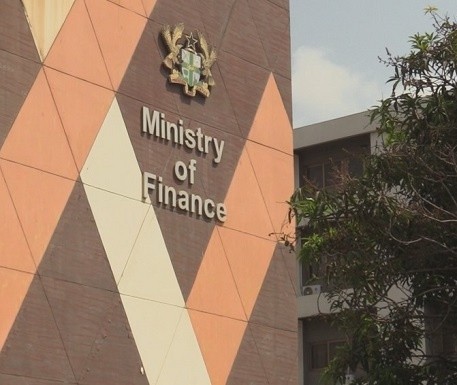
We are not calling on the Attorney General to withdraw the Tribunals Bill. Rather, we are urging the AG, the President, and the Minister for Finance to prioritize a comprehensive funding regime that adequately resources the current traditional court system if the state is truly committed to achieving swift and efficient adjudication.
To this end, we propose that the government enact legislation to peg a fixed percentage of the national annual revenue directly to the Judiciary. This will guarantee a predictable, independent stream of income, enabling the third arm of government to effectively plan infrastructure expansion, recruit essential personnel, and allocate resources efficiently.
Finally, we propose structural reforms that would make the Chief Justice answerable to Parliament strictly on matters concerning resource allocation and financial accountability.
END
Signed:
Richard Nii Amarh, Esq. Executive Director